
Brushes
Choose the right brush!
Painting with the right brush is important. Get it right with some easy to remember guidelines. Generally art brushes are made from natural or synthetic bristles or fibres. Bristle is firmer and courser, synthetic fibre is generally smoother and softer. Make the choice easier by reading on.
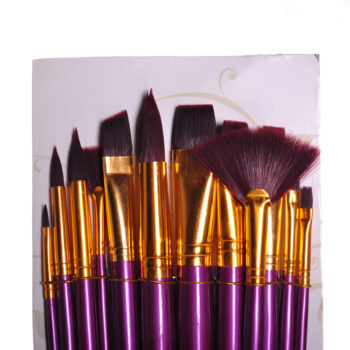
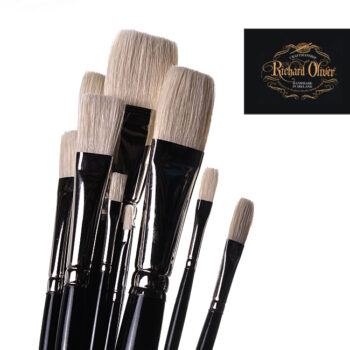
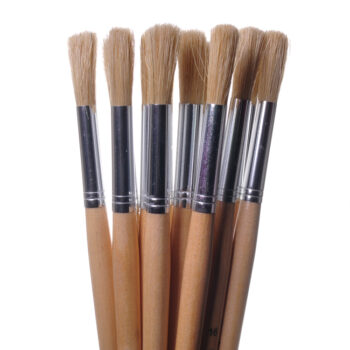
Choose traditional bristle for use with oil paint, and choose synthetic hair for acrylic, watercolour and gouache. Choose bristle when applying paint thickly or where visible brushstrokes are desired. Using synthetic fibre will give a smoother appearance. Use tougher bristle brushes for poster paint and tempera with younger children in mind, as they are more durable and will take hard use.
Select synthetic fibre and sable (natural) brushes when using watercolour, ink, gouache, acrylic ink and so on. Choosing long-handled brushes means they are typically held horizontally while working on an upright surface such as a vertical canvas on an easel. This is most usually as when using oil paint or acrylic paint. When using short-handled brushes they are typically used for flat or slightly inclined work surfaces, such as watercolour painting, illustrating and ink work, and model painting, clay and projects.
Choose the style of brush tip most suitable for your work:
- Round: pointed tip for large and small work.
- Flat: for spreading paint quickly and evenly over a surface.
- Bright: shorter than flats, give a patchwork look.
- Filbert: flat brushes with domed ends.
- Fan: for blending broad areas of paint.
- Rigger: Long, smooth fibres for lining with inks and watercolour.
Choose the right brush!
Painting with the right brush is important. Get it right with some easy to remember guidelines. Generally art brushes are made from natural or synthetic bristles or fibres. Bristle is firmer and courser, synthetic fibre is generally smoother and softer. Make the choice easier by reading on.
Choose traditional bristle for use with oil paint, and choose synthetic hair for acrylic, watercolour and gouache. Choose bristle when applying paint thickly or where visible brushstrokes are desired. Using synthetic fibre will give a smoother appearance. Use tougher bristle brushes for poster paint and tempera with younger children in mind, as they are more durable and will take hard use.
Select synthetic fibre and sable (natural) brushes when using watercolour, ink, gouache, acrylic ink and so on. Choosing long-handled brushes means they are typically held horizontally while working on an upright surface such as a vertical canvas on an easel. This is most usually as when using oil paint or acrylic paint. When using short-handled brushes they are typically used for flat or slightly inclined work surfaces, such as watercolour painting, illustrating and ink work, and model painting, clay and projects.
Choose the style of brush tip most suitable for your work:
- Round: pointed tip for large and small work.
- Flat: for spreading paint quickly and evenly over a surface.
- Bright: shorter than flats, give a patchwork look.
- Filbert: flat brushes with domed ends.
- Fan: for blending broad areas of paint.
- Rigger: Long, smooth fibres for lining with inks and watercolour.